
How to Get Band 7+ in IELTS Listening: 10 Common Mistakes That Lower Your Score
Why Many Students Stay Stuck at Band 6
Many IELTS candidates find themselves stuck at Band 6 or 6.5 despite months of practice. They understand English well, follow conversations, and complete countless practice tests, yet their Listening score never seems to improve.
The problem usually isn’t their English ability. Instead, it’s a series of small, repeated mistakes that add up over the 40 questions in the Listening test.
The good news? These mistakes are completely fixable.
In this guide, you’ll discover the 10 most common IELTS Listening mistakes and learn exactly how to avoid them.
1. Not Reading the Questions Before the Recording Starts
Why It Happens
Many students treat the preparation time as waiting time instead of working time.
As a result, they begin listening without understanding what information they need.
What Happens
They miss the first answer because they’re still reading the questions while the recording has already started.
How to Fix It
Always use the preparation time to:
- Read every question.
- Understand the topic.
- Predict the answer type.
- Underline important keywords.
Starting the recording prepared makes it much easier to follow the conversation.
2. Losing Focus After Missing One Answer
Why It Happens
Missing one answer causes panic.
Students spend too much time thinking about the missed question while the recording continues.
What Happens
One missed answer often becomes three or four missed answers.
How to Fix It
If you miss an answer:
- Make your best guess.
- Flag it if you’re taking the computer test.
- Move on immediately.
Remember, you can’t replay the recording.
Protect the next answers instead of worrying about the previous one.
3. Not Predicting the Answer
Why It Happens
Many students simply wait for the answer instead of preparing for it.
What Happens
When several possible answers are mentioned, they choose the wrong one.
How to Fix It
Before the recording starts, ask yourself:
- Is the answer a number?
- A name?
- A place?
- An adjective?
- A noun?
Prediction helps you recognise the correct answer much faster.
4. Ignoring Keywords
Why It Happens
Students often listen generally instead of listening for specific information.
What Happens
They lose track of where they are in the recording.
How to Fix It
Underline keywords before listening.
Focus on:
- Names
- Places
- Numbers
- Dates
- Important nouns
- Descriptive words
Keywords act as signposts throughout the recording.
5. Making Spelling Mistakes
Why It Happens
Candidates hear the correct answer but spell it incorrectly.
Common Examples
- accommodation
- recommend
- necessary
- occurrence
- professional
British spelling can also cause problems:
- colour
- centre
- organise
- licence
How to Fix It
Create your own IELTS spelling notebook.
Review commonly misspelled words regularly and always double-check spelling during the review time.
6. Mishearing Numbers
Why It Happens
Numbers often sound similar, especially at natural speaking speed.
Examples include:
- 13 vs 30
- 14 vs 40
- 15 vs 50
How to Fix It
Practise listening to:
- Prices
- Dates
- Phone numbers
- Reference numbers
- Times
The more number dictation you practise, the easier these become.
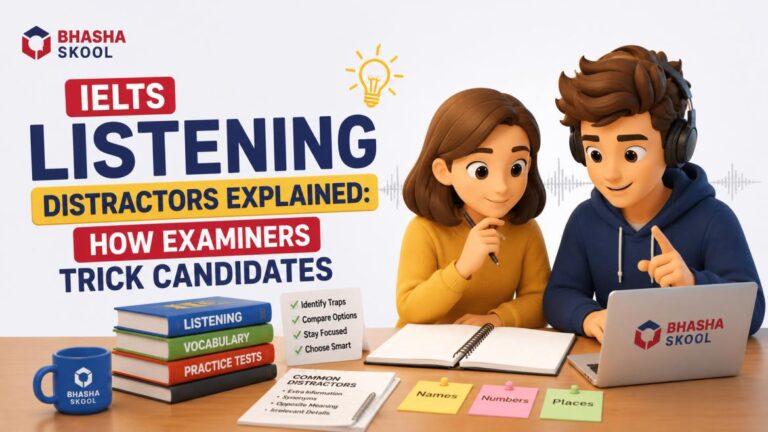
7. Falling for Distractors
Why It Happens
Students write the first relevant information they hear.
Unfortunately, IELTS often changes that information.
Example
“The class is on Tuesday…
Actually, we’ve moved it to Thursday.”
The correct answer is Thursday, not Tuesday.
How to Fix It
Never write immediately.
Instead:
- Listen carefully.
- Wait for confirmation.
- Watch for words like:
- actually
- sorry
- I mean
- let me correct that
Write only after the speaker has finished discussing that point.
8. Having Limited Academic Vocabulary
Why It Happens
Sections 3 and 4 include more academic language.
Unknown words slow your thinking and make you miss the next answer.
How to Fix It
Build your academic vocabulary by:
- Studying the Academic Word List.
- Reading articles regularly.
- Reviewing unfamiliar IELTS words after every practice test.
A stronger vocabulary reduces hesitation during the exam.
9. Practising Only on Paper
Why It Happens
Many students prepare using paper-based tests but take the computer-delivered exam.
Typing while listening requires a different skill.
How to Fix It
Complete at least half of your practice tests on a computer.
Practise:
- Typing answers quickly.
- Using the flag feature.
- Zooming maps and diagrams.
- Reviewing answers efficiently.
The more familiar the format feels, the more confident you’ll be on test day.
10. Listening Passively Instead of Actively
Why It Happens
In everyday life, we listen for general meaning.
IELTS requires targeted listening.
What Active Listening Looks Like
Before the recording starts, know exactly what you’re listening for.
During the recording:
- Follow keywords.
- Listen for confirmation.
- Ignore distractors.
- Focus on the specific information needed for each question.
This approach dramatically improves accuracy.
What High-Scoring Candidates Do Differently
Students who achieve Band 7 or higher don’t necessarily know more English.
They simply have better test habits.
They consistently:
- Use every second of the preparation time.
- Predict answer types.
- Underline keywords.
- Wait for confirmation before writing.
- Recognise distractors.
- Move on immediately after missing an answer.
- Check spelling carefully.
- Review their mistakes after every practice test.
These habits make a significant difference over 40 questions.
Three Habits That Lead to Band 7+
If you only change three things, make them these.
1. Use the Preparation Time Properly
Always:
- Read the questions.
- Predict answers.
- Mark keywords.
Never waste the preparation window.
2. Keep Moving
Missed an answer?
Forget it and continue listening.
Maintaining momentum protects the rest of your score.
3. Review Your Mistakes
After every practice test, identify why each answer was wrong.
Was it because of:
- Spelling?
- A distractor?
- Poor prediction?
- Word limit?
- Grammar?
- Lack of vocabulary?
Finding patterns is the fastest way to improve.
Final Thoughts
Achieving Band 7 in IELTS Listening isn’t about having perfect English.
It’s about avoiding the small mistakes that cost marks throughout the test.
If you’re currently scoring Band 6 or 6.5, don’t just do more practice tests. Improve how you practise.
Focus on these ten common mistakes, correct them one by one, and turn better strategies into habits.
The difference between Band 6.5 and Band 7 often comes down to smarter preparation—not better English.